|
<!DOCTYPE html> |
|
<html> |
|
<head> |
|
<title>Basic Snake HTML Game</title> |
|
<meta charset="UTF-8"> |
|
<style> |
|
html, body { |
|
height: 100%; |
|
margin: 0; |
|
} |
|
|
|
body { |
|
background: black; |
|
display: flex; |
|
align-items: center; |
|
justify-content: center; |
|
} |
|
canvas { |
|
border: 1px solid white; |
|
} |
|
</style> |
|
</head> |
|
<body> |
|
<canvas width="400" height="400" id="game"></canvas> |
|
<script> |
|
var canvas = document.getElementById('game'); |
|
var context = canvas.getContext('2d'); |
|
|
|
// the canvas width & height, snake x & y, and the apple x & y, all need to be a multiples of the grid size in order for collision detection to work |
|
// (e.g. 16 * 25 = 400) |
|
var grid = 16; |
|
var count = 0; |
|
|
|
var snake = { |
|
x: 160, |
|
y: 160, |
|
|
|
// snake velocity. moves one grid length every frame in either the x or y direction |
|
dx: grid, |
|
dy: 0, |
|
|
|
// keep track of all grids the snake body occupies |
|
cells: [], |
|
|
|
// length of the snake. grows when eating an apple |
|
maxCells: 4 |
|
}; |
|
var apple = { |
|
x: 320, |
|
y: 320 |
|
}; |
|
|
|
// get random whole numbers in a specific range |
|
// @see https://stackoverflow.com/a/1527820/2124254 |
|
function getRandomInt(min, max) { |
|
return Math.floor(Math.random() * (max - min)) + min; |
|
} |
|
|
|
// game loop |
|
function loop() { |
|
requestAnimationFrame(loop); |
|
|
|
// slow game loop to 15 fps instead of 60 (60/15 = 4) |
|
if (++count < 4) { |
|
return; |
|
} |
|
|
|
count = 0; |
|
context.clearRect(0,0,canvas.width,canvas.height); |
|
|
|
// move snake by it's velocity |
|
snake.x += snake.dx; |
|
snake.y += snake.dy; |
|
|
|
// wrap snake position horizontally on edge of screen |
|
if (snake.x < 0) { |
|
snake.x = canvas.width - grid; |
|
} |
|
else if (snake.x >= canvas.width) { |
|
snake.x = 0; |
|
} |
|
|
|
// wrap snake position vertically on edge of screen |
|
if (snake.y < 0) { |
|
snake.y = canvas.height - grid; |
|
} |
|
else if (snake.y >= canvas.height) { |
|
snake.y = 0; |
|
} |
|
|
|
// keep track of where snake has been. front of the array is always the head |
|
snake.cells.unshift({x: snake.x, y: snake.y}); |
|
|
|
// remove cells as we move away from them |
|
if (snake.cells.length > snake.maxCells) { |
|
snake.cells.pop(); |
|
} |
|
|
|
// draw apple |
|
context.fillStyle = 'red'; |
|
context.fillRect(apple.x, apple.y, grid-1, grid-1); |
|
|
|
// draw snake one cell at a time |
|
context.fillStyle = 'green'; |
|
snake.cells.forEach(function(cell, index) { |
|
|
|
// drawing 1 px smaller than the grid creates a grid effect in the snake body so you can see how long it is |
|
context.fillRect(cell.x, cell.y, grid-1, grid-1); |
|
|
|
// snake ate apple |
|
if (cell.x === apple.x && cell.y === apple.y) { |
|
snake.maxCells++; |
|
|
|
// canvas is 400x400 which is 25x25 grids |
|
apple.x = getRandomInt(0, 25) * grid; |
|
apple.y = getRandomInt(0, 25) * grid; |
|
} |
|
|
|
// check collision with all cells after this one (modified bubble sort) |
|
for (var i = index + 1; i < snake.cells.length; i++) { |
|
|
|
// snake occupies same space as a body part. reset game |
|
if (cell.x === snake.cells[i].x && cell.y === snake.cells[i].y) { |
|
snake.x = 160; |
|
snake.y = 160; |
|
snake.cells = []; |
|
snake.maxCells = 4; |
|
snake.dx = grid; |
|
snake.dy = 0; |
|
|
|
apple.x = getRandomInt(0, 25) * grid; |
|
apple.y = getRandomInt(0, 25) * grid; |
|
} |
|
} |
|
}); |
|
} |
|
|
|
// listen to keyboard events to move the snake |
|
document.addEventListener('keydown', function(e) { |
|
// prevent snake from backtracking on itself by checking that it's |
|
// not already moving on the same axis (pressing left while moving |
|
// left won't do anything, and pressing right while moving left |
|
// shouldn't let you collide with your own body) |
|
|
|
// left arrow key |
|
if (e.which === 37 && snake.dx === 0) { |
|
snake.dx = -grid; |
|
snake.dy = 0; |
|
} |
|
// up arrow key |
|
else if (e.which === 38 && snake.dy === 0) { |
|
snake.dy = -grid; |
|
snake.dx = 0; |
|
} |
|
// right arrow key |
|
else if (e.which === 39 && snake.dx === 0) { |
|
snake.dx = grid; |
|
snake.dy = 0; |
|
} |
|
// down arrow key |
|
else if (e.which === 40 && snake.dy === 0) { |
|
snake.dy = grid; |
|
snake.dx = 0; |
|
} |
|
}); |
|
|
|
// start the game |
|
requestAnimationFrame(loop); |
|
</script> |
|
</body> |
|
</html> |

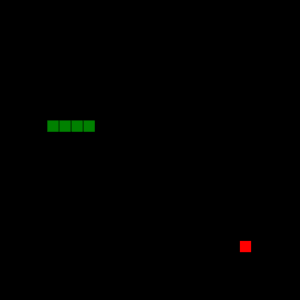

Simple games like Snake still work because they are clear, fast, and easy to understand, even without complex systems or graphics. Projects like this show how basic logic and small mechanics can stay engaging for a long time. It also reminds me of light chance-based entertainment online, where the focus is on simple interaction and short sessions; for example, I’ve seen similar ideas in sweepstakes-style spaces like Sweep Stars , where everything feels quick and straightforward. Sometimes the simplest concepts are the ones people return to most often.