
collection of resources to reflect upon the implications of deploying Machine Learning and Artificial Intelligence in socio-technical systems
tl;dr:
- totally unbiased machine learning is impossible, 'fairness' risks often to become just another business buzzword
- think hard about the politics and the social implications of ML/AI applications
- in some cases the ethical choice means to not deploy ML/AI at all
Datafication of Science
lecture by Kate Crawford (Distinguished AI Scholar) and Trevor Paglen (artist) + following discussion
https://peertube.fr/videos/watch/630ac6bd-c14b-4fe8-9671-64bbaff6e57d
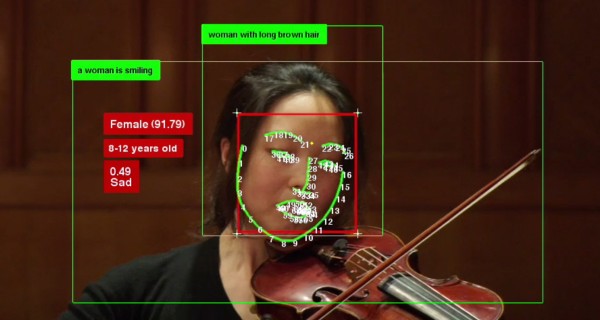
Are Artificial Intelligence and Machine Learning really the right metaphors to address training sets that feed into automated processes? Kate Craword and Trevor Paglen look into the production of training data and uncover the historical origins, labor practices, infrastructures, and epistemological assumptions, with biases and skews built into them from the outset. Departing from these observations they ask: Is there a possibility for decentralized, vernacular AI? How does computational centralization relate to reduction?
extracted from the recording of the event 'Stop Making Sense' @ HKW 12 Jan 2019
https://www.hkw.de/en/programm/projekte/veranstaltung/p_146043.php
AI TRAPS: Automating Discrimination
Day 1 https://www.youtube.com/watch?v=ZzAdo5drZmA
Day 2 https://www.youtube.com/watch?v=7SqHtroA8U8
Day 1:
- THE TRACKED & THE INVISIBLE: From Biometric Surveillance to Diversity in Data Science
Adam Harvey, Sophie Searcy, moderated by Adriana Groh - AI FOR THE PEOPLE: AI Bias, Ethics & The Common Good
Maya Indira Ganesh, Slava Jankin, moderated by Nicole Shephard - WHAT IS A FEMINIST AI? Possible Feminisms, Possible Internets
Charlotte Webb, moderated by Lieke Ploeger
Day 2:
- HOW IS GOVERNMENT USING BIG DATA?
Crofton Black, moderated by Daniel Eriksson - RACIAL DISCRIMINATION IN THE AGE OF AI: The Future of Civil Rights in the United States
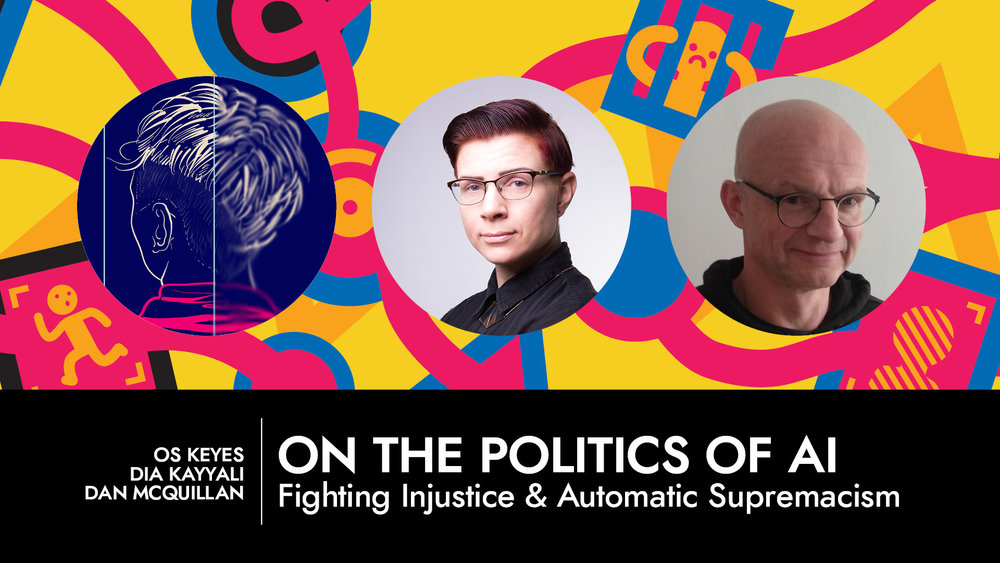
Mutale Nkonde, moderated by Rhianna Ilube - ON THE POLITICS OF AI: Fighting Injustice & Automatic Supremacism
Dia Kayyali, Os Keyes, Dan McQuillan, moderated by Tatiana Bazzichelli
Discriminating Systems: Gender, Race and Power in AI
S.M. West, M. Whittaker, K. Crawford, AI Now Institute (2019)
https://ainowinstitute.org/discriminatingsystems.pdf
Machine Learning Is a Co-opting Machine
Solon Barocas (2019)
https://www.publicbooks.org/machine-learning-is-a-co-opting-machine/
Letting Go of Technochauvinism
Meredith Broussard (2019)
https://www.publicbooks.org/letting-go-of-technochauvinism/
AI Now 2018 Report
M. Whittaker et al., NYU, (2018)
https://ainowinstitute.org/AI_Now_2018_Report.pdf
After a Year of Tech Scandals, Our 10 Recommendations for AI
AI Now Institute, 6 Dec 2018
https://medium.com/@AINowInstitute/after-a-year-of-tech-scandals-our-10-recommendations-for-ai-95b3b2c5e5
Artificial intelligence and privacy (Kunstig intelligens og personvern)
Datatilsynet report, 11 Jan 2018
Most applications of artificial intelligence (AI) require huge volumes of data in order to learn and make intelligent decisions. Artificial intelligence is high on the agenda in most sectors due to its potential for radically improved services, commercial break-throughs and financial gains. This report aims to describe and help us understand how our privacy is affected by the development and application of artificial intelligence.
https://www.datatilsynet.no/en/about-privacy/reports-on-specific-subjects/ai-and-privacy/
Anatomy of an AI System
The Amazon Echo as an anatomical map of human labor, data and planetary resources
by Kate Crawford and Vladan Joler, Sep 2018
https://anatomyof.ai/
Towards an antifascist AI
Dan McQuillan
http://danmcquillan.io/ai_and_antifascism.html
Where fairness fails: data, algorithms, and the limits of antidiscrimination discourse
Anna Lauren Hoffmann, Information, Communication & Society, 22:7, 900-915, 2019
https://doi.org/10.1080/1369118X.2019.1573912
People’s Councils for Ethical Machine Learning
Dan McQuillan, Social Media + Society, 2018
https://doi.org/10.1177/2056305118768303
Facial recognition is the plutonium of AI
by Luke Stark, XRDS: Crossroads, The ACM Magazine for Students archive, Volume 25 Issue 3, Spring 2019, Pages 50-55
https://doi.org/10.1145/3313129
Potemkin AI
Many instances of “artificial intelligence” are artificial displays of its power and potential
by Jathan Sadowski, 6 Aug 2018
http://reallifemag.com/potemkin-ai/
Big Data Analytics and Human Rights
by Mark Latonero
https://doi.org/10.1017/9781316838952.007
Governing Artificial Intelligence
Upholding Human Rights & Dignity
Mark Latonero, Data & Society, 10 Oct 2018
https://datasociety.net/output/governing-artificial-intelligence/
Algorithmic Accountability: A Primer
Data & Society report by Robyn Caplan, Joan Donovan, Lauren Hanson, and Jeanna Matthews, Apr 18 2018
https://datasociety.net/output/algorithmic-accountability-a-primer/
Critical Perspectives on Artificial Intelligence and Human Rights
by Melanie Penagos, June 20 2018
https://points.datasociety.net/critical-perspectives-on-artificial-intelligence-and-human-rights-971bfc02d3c
The Seductive Diversion of ‘Solving’ Bias in Artificial Intelligence
Trying to “fix” A.I. distracts from the more urgent questions about the technology
Julia Powles, 7 Dec 2018
https://medium.com/s/story/the-seductive-diversion-of-solving-bias-in-artificial-intelligence-890df5e5ef53
AI on the Ground
Initiative at Data & Society (2019)
https://datasociety.net/research/ai-on-the-ground/
AI in Context - The Labor of Integrating New Technologies
Alexandra Mateescu, Madeleine Clare Elish, Data & Society Report, 30 Jan 2019
https://datasociety.net/output/ai-in-context/
Awful AI
Awful AI is a curated list to track current scary usages of AI - hoping to raise awareness to its misuses in society
https://github.com/daviddao/awful-ai/blob/master/README.md
Odd Numbers
Algorithms alone can’t meaningfully hold other algorithms accountable
by Frank Pasquale, 20 August 2018
http://reallifemag.com/odd-numbers/
Myth and the Making of AI
by Molly McCue and Kat Holmes, 16 Jul 2018
https://jods.mitpress.mit.edu/pub/holmes-mccue
Facial Recognition Is the Perfect Tool for Oppression
With such a grave threat to privacy and civil liberties, measured regulation should be abandoned in favor of an outright ban
by Woodrow Hartzog, 2 Aug 2018
https://medium.com/s/story/facial-recognition-is-the-perfect-tool-for-oppression-bc2a08f0fe66
Friction-Free Racism
Surveillance capitalism turns a profit by making people more comfortable with discrimination
Chris Gilliard, 15 Oct 2018
http://reallifemag.com/friction-free-racism/
Controlled Measures
Phrenology lies at the heart of biometric governance
by R. Joshua Scannell, 17 Sep 2018
http://reallifemag.com/controlled-measures/
Big Brother’s Blind Spot
"Mining the failures of surveillance tech"
by Joanne McNeil, The Baffler no.40, July 2018
https://thebaffler.com/salvos/big-brothers-blind-spot-mcneil
The Dangers of Facial Analysis
By Joy Buolamwini, June 21 2018
https://www.nytimes.com/2018/06/21/opinion/facial-analysis-technology-bias.html
Design Justice, A.I., and Escape from the Matrix of Domination
by Sasha Costanza-Chock, updated 18 Jul 2018
https://jods.mitpress.mit.edu/pub/costanza-chock
AI in the Doctor-Patient Relationship
"Identifying Some Legal Questions We Should Be Asking"
by Claudia Haupt, June 19 2018
https://points.datasociety.net/ai-in-the-doctor-patient-relationship-1b44dd1b24c8
Engine Failure
Safiya Umoja Noble and Sarah T. Roberts on the Problems of Platform Capitalism, Logic Issue 3 "Injustice"
https://logicmag.io/03-engine-failure/
Machine bias: There’s software used across the country to predict future criminals. and it’s biased against blacks
by Julia Angwin, Jeff Larson, Surya Mattu and Lauren Kirchner, ProPublica, 23 May 2016
https://www.propublica.org/article/machine-bias-risk-assessments-in-criminal-sentencing
Artificial Intelligence’s White Guy Problem
Kate Crawford, The New York Times (2016)
https://www.nytimes.com/2016/06/26/opinion/sunday/artificial-intelligences-white-guy-problem.html
Critical Questions For Big Data - Provocations for a cultural, technological, and scholarly phenomenon
danah boyd & Kate Crawford, Information, Communication & Society, 15:5, 662-679, 2012
https://doi.org/10.1080/1369118X.2012.678878
Machine Learning Harassment
Caroline Sinders
https://xyz.informationactivism.org/en/machine-learning-harassment
Weapons of Math Destruction - How Big Data Increases Inequality and Threatens Democracy
by Cathy O'Neil (2016)
https://www.penguinrandomhouse.com/books/241363/weapons-of-math-destruction-by-cathy-oneil/
Algorithms of Oppression - How Search Engines Reinforce Racism
by Safiya Umoja Noble (2018)
https://nyupress.org/books/9781479837243/
Automating Inequality - How High-Tech Tools Profile, Police, and Punish the Poor
by Virginia Eubanks (2018)
https://us.macmillan.com/books/9781250074317
Artificial Unintelligence - How Computers Misunderstand the World
by Meredith Broussard (2018)
https://mitpress.mit.edu/books/artificial-unintelligence
The AI Delusion
by Gary Smith (2018)
https://global.oup.com/academic/product/the-ai-delusion-9780198824305?cc=no&lang=en&
-
Systemic Algorithmic Harms
Theories of “bias” alone will not enable us to engage in critiques of broader socio-technical systems.
Kinjal Dave , 31 May 2019 https://points.datasociety.net/systemic-algorithmic-harms-e00f99e72c42 -
The problem with AI ethics
Is Big Tech’s embrace of AI ethics boards actually helping anyone?
James Vincent, 3 Apr 2019 https://www.theverge.com/2019/4/3/18293410/ai-artificial-intelligence-ethics-boards-charters-problem-big-tech -
Analyzing & Preventing Unconscious Bias in Machine Learning
https://www.infoq.com/presentations/unconscious-bias-machine-learning -
A.I. Could Worsen Health Disparities In a health system riddled with inequity, we risk making dangerous biases automated and invisible.
Dhruv Khullar, 31 Jan 2019
https://www.nytimes.com/2019/01/31/opinion/ai-bias-healthcare.html -
Automating Society – Taking Stock of Automated Decision-Making in the EU
A report by AlgorithmWatch in cooperation with Bertelsmann Stiftung, supported by the Open Society Foundations
https://algorithmwatch.org/en/automating-society/ -
The Great White Robot God - Artificial General Intelligence and White Supremacy
by David Golumbia
https://medium.com/@davidgolumbia/the-great-white-robot-god-bea8e23943da -
Five theses on technoliberalism and the networked public sphere
by Damien Smith Pfister and Misti Yang, Sep 2018
https://doi.org/10.1177%2F2057047318794963 -
The Environment is Not a System
by Tega Brain, July 2018
http://www.aprja.net/the-environment-is-not-a-system/ -
How Companies Use Personal Data Against People
Automated disadvantage and personalized manipulation? A working paper on the societal ramifications of the commercial use of personal information, with a focus on automated decision-making, personalization, and data-driven behavioral change.
working Paper by Wolfie Christl, Cracked Labs, October 2017
http://crackedlabs.org/en/data-against-people -
Corporate Surveillance in Everyday Life
Report: How thousands of companies monitor, analyze, and influence the lives of billions. Who are the main players in today’s digital tracking? What can they infer from our purchases, phone calls, web searches, and Facebook likes? How do online platforms, tech companies, and data brokers collect, trade, and make use of personal data?
by Wolfie Christl, Cracked Labs, June 2017
http://crackedlabs.org/en/corporate-surveillance -
Networks of Control
A Report on Corporate Surveillance, Digital Tracking, Big Data & Privacy
by Wolfie Christl and Sarah Spiekermann, 2016
http://crackedlabs.org/en/networksofcontrol -
Glitch capitalism: How cheating AIs explain our glitchy society
by Malcom Harris, 23 April 2018
https://nymag.com/selectall/2018/04/malcolm-harris-on-glitch-capitalism-and-ai-logic.html -
Ungoverned Space: How Surveillance Capitalism and AI Undermine Democracy
by Taylor Owen, March 20 2018
https://www.cigionline.org/articles/ungoverned-space -
The Automation Charade" by Astra Taylor
Finding the human in the machine
https://logicmag.io/05-the-automation-charade/ -
Selling Smartness
"Corporate Narratives and the Smart City as a Sociotechnical Imaginary"
Jathan Sadowski and Roy Bendor, 16 Oct 2018
http://journals.sagepub.com/doi/full/10.1177/0162243918806061 -
Stop Saying 'Smart Cities'
"Digital stardust won’t magically make future cities more affordable or resilient."
by Bruce Sterling, Feb 12 2018
https://www.theatlantic.com/technology/archive/2018/02/stupid-cities/553052/ -
The Data Is Ours!
"What is big data? And how do we democratize it?"
by Ben Tarnoff, Logic Issue 4 "Scale"
https://logicmag.io/04-the-data-is-ours/ -
Weaponised AI is coming. Are algorithmic forever wars our future?
"The US military is creating a more automated form of warfare – one that will greatly increase its capacity to wage war everywhere forever."
by Ben Tarnoff, 11 Oct 2018
https://www.theguardian.com/commentisfree/2018/oct/11/war-jedi-algorithmic-warfare-us-military -
Machine learned cruelty and border control
by Flavia Dzodan, June 19 2018
https://artificeofintelligence.org/machine-learned-cruelty-and-border-control/ -
Personal Panopticons
"A key product of ubiquitous surveillance is people who are comfortable with it"
by L. M. Sacasas, 5 Nov 2018
https://reallifemag.com/personal-panopticons/ -
Big Other: Surveillance Capitalism and the Prospects of an Information Civilization.
by Shoshanna Zuboff, Journal of Information Technology 30 (2015): 75–89
https://ssrn.com/abstract=2594754 -
The challenges of platform capitalism: Understanding the logic of a new business model
by Nick Srnicek, Juncture 23(4), March 2017
https://doi.org/10.1111/newe.12023 -
Deceived By Design
How tech companies use dark patterns to discourage us from exercising our rights to privacy
Forbrukerrådet, June 27 2018
https://fil.forbrukerradet.no/wp-content/uploads/2018/06/2018-06-27-deceived-by-design-final.pdf -
Weaponizing the Digital Influence Machine
"The Political Perils of Online Ad Tech"
by Anthony Nadler, Matthew Crain, and Joan Donovan, Data & Society, 17 Oct 2018
https://datasociety.net/output/weaponizing-the-digital-influence-machine/ -
The Darkness at the End of the Tunnel: Artificial Intelligence and Neoreaction Shuja Haider, Viewpoint (2017)
https://www.viewpointmag.com/2017/03/28/the-darkness-at-the-end-of-the-tunnel-artificial-intelligence-and-neoreaction/ -
Overpowered Metrics Eat Underspecified Goals
by David Manheim, September 29 2016
https://www.ribbonfarm.com/2016/09/29/soft-bias-of-underspecified-goals/ -
Google and Microsoft have made a pact to protect surveillance capitalism
"Two bitter rivals have agreed to drop mutual antitrust cases across the globe. Why? To fend off the greater regulatory threat of democratic oversight"
by Julia Powles, 2 May 2016
https://www.theguardian.com/technology/2016/may/02/google-microsoft-pact-antitrust-surveillance-capitalism -
The Moral Economy of Tech
by Maciej Cegłowski, June 2016
http://idlewords.com/talks/sase_panel.htm -
How big data is unfair?
by Moritz Hardt, 26 September 2014
https://medium.com/@mrtz/how-big-data-is-unfair-9aa544d739de -
The New Octopus
"Technology has spawned new corporate giants. Their control of society’s digital infrastructure threatens our democracy. What should we do about it?"
by K. Sabeel Rahman, Logic Issue 4 "Scale"
https://logicmag.io/04-the-new-octopus/
The Color of Algorithms: An Analysis and Proposed Research Agenda for Deterring Algorithmic Redlining
James A. Allen, 46 Fordham Urb. L.J. 219 (2019)
https://ir.lawnet.fordham.edu/ulj/vol46/iss2/1
Bias detectives: the researchers striving to make algorithms fair
As machine learning infiltrates society, scientists are trying to help ward off injustice.
by Rachel Courtland, June 20 2018
https://www.nature.com/articles/d41586-018-05469-3
Fairness and Abstraction in Sociotechnical Systems
Andrew D. Selbst, danah boyd, Sorelle Friedler, Suresh Venkatasubramanian, Janet Vertesi, ACM Conference on Fairness, Accountability, and Transparency (FAT*), Vol. 1, No. 1
https://ssrn.com/abstract=3265913
Situating Methods in the Magic of Big Data and Artificial Intelligence
M. C. Elish and danah boyd, Sep 2017, Communication Monographs
https://ssrn.com/abstract=3040201
An AI Race for Strategic Advantage: Rhetoric and Risks
Stephen Cave, Seán S ÓhÉigeartaigh
http://www.aies-conference.com/wp-content/papers/main/AIES_2018_paper_163.pdf
Big Data and discrimination: perils, promises and solutions. A systematic review
Maddalena Favaretto, Eva De Clercq and Bernice Simone Elger, Journal of Big Data 2019 6:12
https://doi.org/10.1186/s40537-019-0177-4
Dirty Data, Bad Predictions: How Civil Rights Violations Impact Police Data, Predictive Policing Systems, and Justice
Rashida Richardson, Jason Schultz, and Kate Crawford, 13 February 2019, New York University Law Review Online
https://papers.ssrn.com/sol3/papers.cfm?abstract_id=3333423
Ten simple rules for responsible big data research
Zook M, Barocas S, boyd d, Crawford K, Keller E, Gangadharan SP, et al., PLoS Comput Biol 13(3): e1005399 (2017) https://doi.org/10.1371/journal.pcbi.1005399
Transparency and Explanation in Deep Reinforcement Learning Neural Networks
Rahul Iyer, Yuezhang Li, Huao Li, Michael Lewis, Ramitha Sundar, Katia Sycara
https://arxiv.org/abs/1809.06061
50 Years of Test (Un)fairness: Lessons for Machine Learning
Ben Hutchinson, Margaret Mitchell
https://arxiv.org/abs/1811.10104
Gender Shades: Intersectional Accuracy Disparities in Commercial Gender Classification
Joy Buolamwini, Timnit Gebru, Proceedings of the 1st Conference on Fairness, Accountability and Transparency, PMLR 81:77-91, 2018.
http://proceedings.mlr.press/v81/buolamwini18a.html
Fairer Machine Learning in the Real World: Mitigating Discrimination Without Collecting Sensitive Data
Michael Veale and Reuben Binns, Big Data & Society 4(2), 2017
https://journals.sagepub.com/doi/10.1177/2053951717743530
Blind Justice: Fairness with Encrypted Sensitive Attributes
Niki Kilbertus, Adrià Gascón, Matt J. Kusner, Michael Veale, Krishna P. Gummadi, Adrian Weller
Recent work has explored how to train machine learning models which do not discriminate against any subgroup of the population as determined by sensitive attributes such as gender or race. To avoid disparate treatment, sensitive attributes should not be considered. On the other hand, in order to avoid disparate impact, sensitive attributes must be examined, e.g., in order to learn a fair model, or to check if a given model is fair. We introduce methods from secure multi-party computation which allow us to avoid both. By encrypting sensitive attributes, we show how an outcome-based fair model may be learned, checked, or have its outputs verified and held to account, without users revealing their sensitive attributes.
https://arxiv.org/abs/1806.03281
POTs: Protective Optimization Technologies
by Seda Gürses , Rebekah Overdorf, Ero Balsa
In spite of their many advantages, optimization systems often neglect the economic, ethical, moral, social, and political impact they have on populations and their environments. In this paper we argue that the frameworks through which the discontents of optimization systems have been approached so far cover a narrow subset of these problems by (i) assuming that the system provider has the incentives and means to mitigate the imbalances optimization causes, (ii) disregarding problems that go beyond discrimination due to disparate treatment or impact in algorithmic decision making, and (iii) developing solutions focused on removing algorithmic biases related to discrimination.
In response we introduce Protective Optimization Technologies: solutions that enable optimization subjects to defend from unwanted consequences. We provide a framework that formalizes the design space of POTs and show how it differs from other design paradigms in the literature. We show how the framework can capture strategies developed in the wild against real optimization systems, and how it can be used to design, implement, and evaluate a POT that enables individuals and collectives to protect themselves from unbalances in a credit scoring application related to loan allocation.
https://arxiv.org/abs/1806.02711
Problem Formulation and Fairness
Samir Passi and Solon Barocas, FAT* '19 Proceedings of the Conference on Fairness, Accountability, and Transparency
Pages 39-48
https://doi.org/10.1145/3287560.3287567
Tutorial: 21 fairness definitions and their politics
Arvind Narayanan
https://www.youtube.com/watch?v=jIXIuYdnyyk
Discrimination through optimization: How Facebook's ad delivery can lead to skewed outcomes
Muhammad Ali, Piotr Sapiezynski, Miranda Bogen, Aleksandra Korolova, Alan Mislove, Aaron Rieke
https://arxiv.org/abs/1904.02095
Toward ethical, transparent and fair AI/ML: a critical reading list
by Eirini Malliaraki, Feb 19 2018
https://medium.com/@eirinimalliaraki/toward-ethical-transparent-and-fair-ai-ml-a-critical-reading-list-d950e70a70ea
Critical Algorithm Studies: a Reading List
by Tarleton Gillespie and Nick Seaver
https://socialmediacollective.org/reading-lists/critical-algorithm-studies/#1.1
Governing Algorithms Reading List
https://governingalgorithms.org/resources/reading-list/
Algorithmic Studies: A (Brief) Critical Survey
By Jamie Macdonald, 31 July 2015
https://algorithmicstudies.uchri.org/literature-survey/
Auditing Algorithms From the Outside: Methods and Implications
Background Readings
https://auditingalgorithms.wordpress.com/background-readings/
algoaware.eu bibliography
https://www.algoaware.eu/bibliography/